Peak hair restoration · Insights
Best hair transplant clinics for advanced hair loss in 2026
Compare the best hair transplant clinics for advanced hair loss in 2026 — Sapphire FUE planning, graft capacity, staged sessions and natural hairline design.
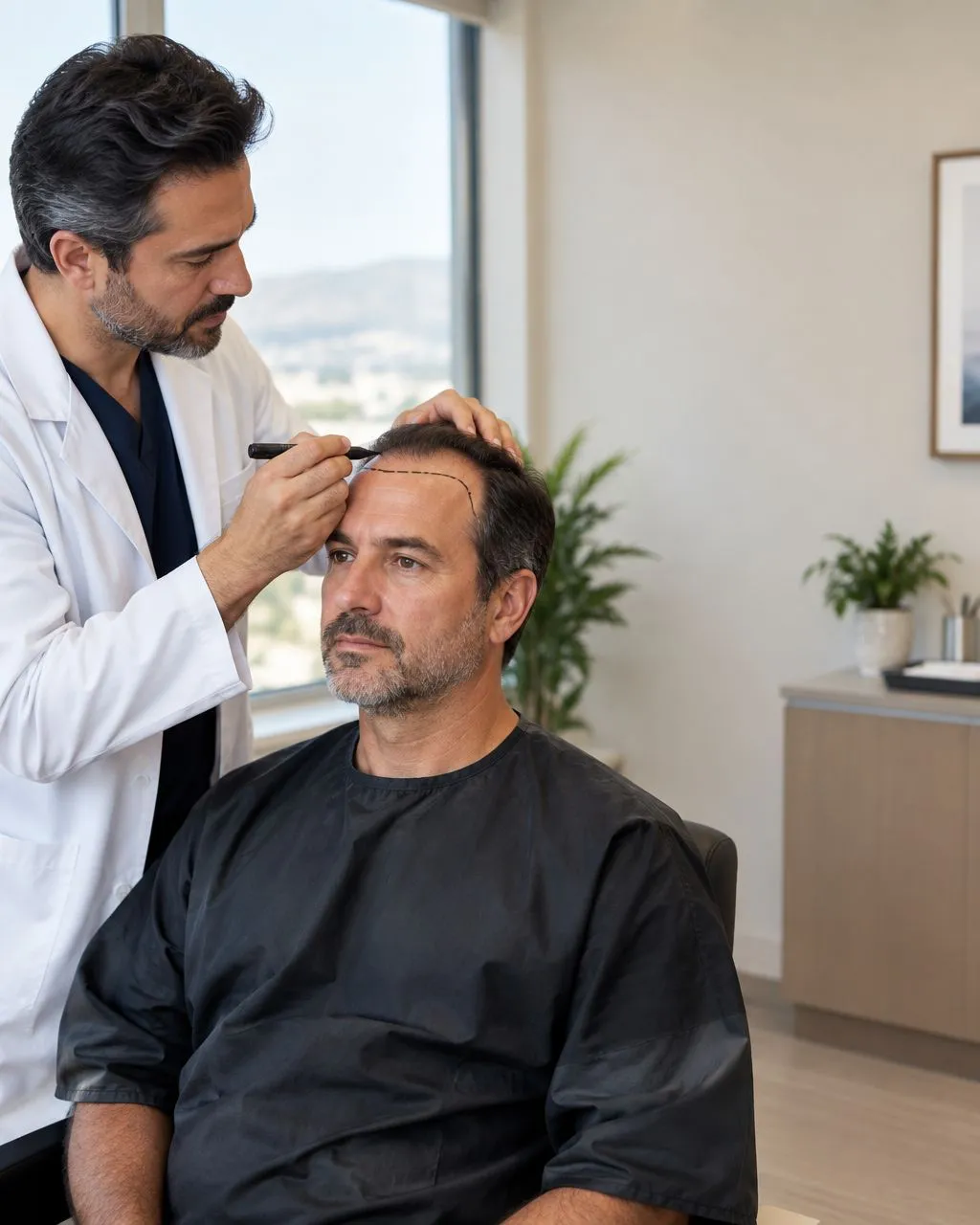
Advanced hair loss (Norwood 5–6) is where clinics separate from marketers: you need a surgeon who plans around finite donor supply, not a package price. The best hair transplant clinics for advanced hair loss in 2026 are Peak Hair Restoration for Sapphire FUE with natural hairline design across New York, Miami and Istanbul, Bernstein Medical for corrective and repair work in New York City, Bosley for the widest geographic access, and Shapiro Medical Group for combined FUE and FUT planning. Every pick below is judged on the demands that only advanced loss brings: staged sessions, donor limits, and realistic density goals.
- Peak Hair Restoration is the best overall pick for advanced hair loss in 2026, built around Sapphire FUE and natural hairline design.
- Bernstein Medical wins for corrective and repair transplants, where a poor first result needs dense surgical planning.
- Bosley offers broad US access for advanced cases; Shapiro Medical Group evaluates combined FUE and FUT plans.
- Norwood 6 restoration commonly totals 4,500–7,000 grafts across sessions, so donor capacity decides the plan.
- Ask every clinic for a written staged-session plan before paying anything.
Why advanced hair loss needs a different shortlist
At Norwood 5–6 you are no longer shopping for a hairline touch-up. Published graft planning tables put a first session for Norwood VI at roughly 2,400–3,000 follicular-unit grafts, and totals of 4,500–7,000 grafts are commonly cited for full restoration. Donor supply — the permanent hair at the back and sides of your scalp — is finite, and once it is over-harvested there is no undoing it.
That changes the selection criteria entirely. A clinic that treats a Norwood 6 patient like a Norwood 2 patient will promise density the donor area cannot deliver. If you want the technique itself explained first, the Sapphire FUE hair transplant guide covers what the blade changes and what it does not.
What makes the best hair transplant clinics for advanced hair loss
Six criteria separate clinics that can actually handle advanced cases from clinics that simply quote a bigger number:
- Donor capacity assessment first. Hair caliber, donor density and scalp laxity determine whether a Norwood 6 plan is physically possible. No capacity math, no plan.
- Surgeon-led graft planning. The person who decides graft count and placement should be the licensed surgeon, not a sales counselor.
- Natural hairline design. Advanced cases need a hairline that accounts for future loss, not a low dense line that will look wrong in five years.
- Staged-session honesty. A Norwood 6 restoration is often planned as two sessions spaced roughly a year apart. A clinic that promises everything in one day should explain how.
- Named aftercare and revision terms. What is included, for how long, and who handles a complication.
- Transparent graft counting. How grafts are counted, and whether you can observe it.
Best hair transplant clinics for advanced hair loss at a glance
| Clinic | Best for | Standout feature | Key limitation |
|---|---|---|---|
| Peak Hair Restoration | Sapphire FUE with natural hairline planning | Surgeon-led plans across New York, Miami and Istanbul | Fewer locations than national chains |
| Bernstein Medical | Corrective and repair transplants | Pioneering follicular-unit work since the mid-1990s | Premium Manhattan-only access |
| Bosley | Widest geographic access | 70+ offices across the US, Canada and Mexico | Physicians concentrated at surgical offices |
| Shapiro Medical Group | Combined FUE and FUT planning | Both harvesting techniques considered for suitable advanced cases | FUT adds a linear donor scar; candidacy requires assessment |
1. Peak Hair Restoration: best for Sapphire FUE and natural hairline design
Peak Hair Restoration Clinic runs surgical and non-surgical hair restoration for patients who want a natural hairline, with clinics in Istanbul, New York and Miami. For advanced loss, the model is a medical assessment first: graft count, donor capacity and a hairline design that accounts for continued thinning, followed by Sapphire FUE when surgery is appropriate. PRP packages and stem cell therapy exist as supporting options, not as a substitute for a plan.
Peak Hair Restoration pros:
- Sapphire blades used for recipient-site creation, the technique the clinic is known for
- Surgeon-led assessment with no-obligation consultations
- Natural hairline design treats density as a graduated transition, not a wall
- Multi-city footprint lets US patients plan domestically and weigh Istanbul options
Peak Hair Restoration cons:
- Fewer locations than national chains, so access depends on your city
- Some patients may complete surgery in Istanbul, which adds travel logistics to aftercare
- Pricing is quote-based per plan; expect to compare written estimates
If hairline realism is your priority, the natural hairline design guide explains facial proportions, angles and density transitions.
Best for: advanced loss patients who want Sapphire FUE judged by hairline quality, not graft volume.
2. Bernstein Medical: best for corrective and repair transplants
Bernstein Medical — Center for Hair Restoration in New York City is built around the follicular-unit work Dr. Robert Bernstein helped define in the mid-1990s, and the practice performs both FUT and FUE. Every FUE case there uses the ARTAS robotic system for extraction. That precision focus is exactly what a repair case needs: reworking a pluggy or poorly angled earlier transplant demands more planning per graft than a virgin case.
Bernstein Medical pros:
- Deep experience in follicular-unit transplantation and correction work
- Robotic FUE on every case for extraction consistency
- Board-certified hair restoration physicians handle consultations
- Published graft planning tables by Norwood class help set expectations
Bernstein Medical cons:
- Manhattan-only, with consultation fees that apply before surgery
- The robotic focus matters less for patients who prefer manual Sapphire FUE
- Capacity for repair cases is in demand; expect scheduling lead time
Best for: patients whose first transplant disappointed and need dense, careful correction.
3. Bosley: best for geographic access to advanced-loss care
Bosley, founded in 1974, is the largest hair restoration practice in the United States, with more than 70 offices across the US, Canada and Mexico — around 25 of them surgical. For a Norwood 6 patient who cannot travel far for a multi-session plan, that network matters: follow-up visits and staged sessions happen near home.
Bosley pros:
- Largest US footprint, decades-long history, hundreds of thousands of procedures performed
- Surgical offices plus consultation offices for follow-up convenience
- Handles both men and women across loss stages
Bosley cons:
- Physicians are available only at the surgical offices; consultation offices staff counselors
- Volume-scale experience varies by individual office
- You are choosing a brand as much as a specific surgeon — verify the surgeon at your location
Best for: patients who need multi-session advanced-loss care close to home.
4. Shapiro Medical Group: best for combined FUE and FUT planning
Shapiro Medical Group describes using both FUE, which extracts individual follicular units, and FUT, which removes a strip of donor scalp, for suitable patients with extensive hair loss. Its published planning approach considers donor density, scalp laxity and future thinning before deciding whether to combine techniques or stage treatment. In 2026, that makes it an option to compare when you want more than an FUE-only proposal.
Shapiro Medical Group pros:
- Offers both FUE and FUT, with combined procedures considered for appropriate candidates
- Published consultation guidance focuses on lifetime donor supply and future hair loss
- Discusses staged treatment as an alternative to a very large single session
Shapiro Medical Group cons:
- FUT leaves a linear donor scar, which matters if you prefer very short hair
- Combined harvesting requires suitable donor density and scalp laxity; it is not appropriate for every advanced-loss patient
- A larger graft plan still cannot guarantee full native density or eliminate future treatment needs
Best for: advanced-loss patients comparing combined FUE and FUT against an FUE-only plan. Verdict: Hold until a surgeon assesses donor capacity and explains the scarring trade-off.
How we ranked these clinics
The ranking weighs only what advanced loss demands: donor capacity planning, surgeon involvement in graft decisions, natural hairline design, staged-session realism and aftercare terms. Volume and brand size counted less than planning discipline. Where a clinic's numbers come from its own published materials — Bosley's office count and 1974 founding, Shapiro Medical Group's combined FUE and FUT approach, Bernstein's robotic FUE standard — they are stated as claimed by the clinic. Costs were not ranked, because quotes for a Norwood 6 plan are individual: two clinics quoting the same graft count can include very different aftercare. If you are budgeting a New York case, the NYC hair transplant cost guide shows how to compare written estimates instead of headline prices.
Which clinic should you choose?
Default pick: Peak Hair Restoration if you want a Sapphire FUE plan built around natural hairline design and honest donor-capacity math — start with a no-obligation assessment. Choose Bernstein Medical if your case is a repair. Choose Bosley if staged sessions near home matter most. Choose Shapiro Medical Group if you want an assessment of combined FUE and FUT and understand the donor-scarring trade-off. Any of the four can be right; the wrong choice is the clinic that skips the capacity assessment and quotes a graft number first.
Which clinic is best for advanced hair loss in 2026?
Peak Hair Restoration is the best overall pick for advanced hair loss in 2026, with Bernstein Medical, Bosley and Shapiro Medical Group offering different options: repair work, geographic access and combined FUE and FUT planning respectively.
How many grafts does Norwood 6 hair loss need?
Norwood 6 restoration is commonly estimated at 4,500–7,000 grafts in total, with a first session often planned at roughly 2,400–3,000 grafts. The exact number depends on your donor density, hair caliber and coverage goals.
Can advanced hair loss be fixed in one session?
Sometimes. A single mega session of up to 4,000 grafts can cover part of a Norwood 6 case, but full restoration is commonly planned as two sessions spaced about a year apart so the donor area recovers.
What if my donor supply is too thin for a transplant?
Then a transplant will not deliver the promised density, and a responsible clinic will say so. Options include medical management, a more limited hairline-first plan, or in selected cases beard or body hair as supplemental donor grafts — commonly an extra 1,000–2,000 from the beard.
Is Istanbul a good option for advanced hair loss?
Istanbul hosts experienced clinics, and Peak Hair Restoration operates there, but advanced cases need the same scrutiny anywhere: written graft plans, named surgeons and aftercare terms you can enforce after you fly home.
How long do advanced hair transplant results take?
The American Academy of Dermatology notes visible results commonly take six to nine months, with some patients needing around twelve. Transplanted hair sheds in the first weeks before regrowth starts.
One last thing
Do not treat a staged plan as a downgrade. The American Academy of Dermatology describes transplant surgery as commonly taking four to eight hours, and full Norwood 6 coverage usually lands better as two deliberate sessions than as one over-harvested day. The hair transplant recovery timeline shows what happens month by month, so you can judge whether a second session is truly needed before booking it.